Rotational Lasers

Showing 49–64 of 107 results

Filter
Filter
Categories Kategorien
Brands Brands
Price PREIS
From
To
Device Type Device Type
Properties Properties
Filters
-3%
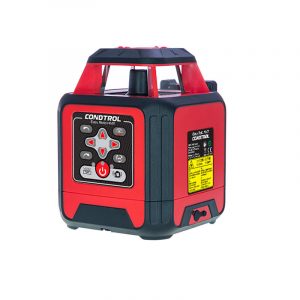
CONDTROL Easy Roto HVR
Art.No.: 7-2-0113

The Easy Roto HVR rotary level projects horizontals all around, inclined planes and a plumb point

Original price was: 700,00 €.Current price is: 675,99 €.
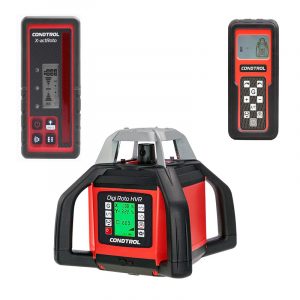
CONDTROL Digi Roto HVR
Art.No.: 7-2-1996

The Digi Roto HVR rotary level projects horizontal lines all around, inclined planes and a plumb point

1.592,99 
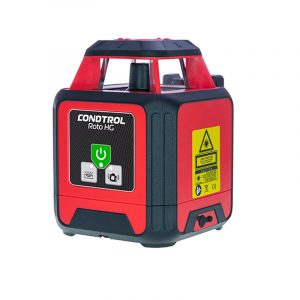
CONDTROL Roto HG
Art.No.: 7-2-087

The leveling device is specially designed for professional use in construction, repair and landscaping work

964,99 
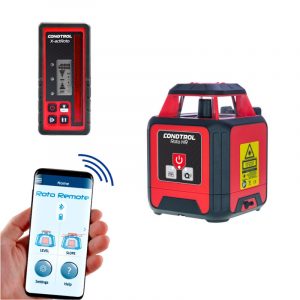
CONDTROL Roto HR
Art.No.: 7-2-1991

The leveling device is specially designed for professional use in construction, repair and landscaping work

771,99 
CONDTROL Roto HVR
Art.No.: 7-2-000

The Roto HVR rotary level projects horizontals all around, inclined planes and a plumb point

964,99 
-35%
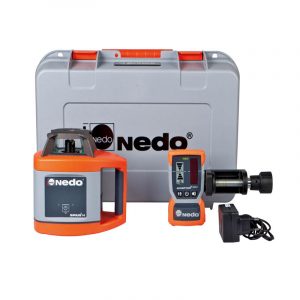
Nedo SIRIUS 1 H rotating laser with ACCEPTOR 2 DIGITAL LK 3
Art.No.: 471933

Sirius 1 H is the new fully automatic horizontal self-levelling rotating laser for surface, garden and landscape construction or building construction and civil engineering

Original price was: 991,99 €.Current price is: 647,99 €.
-33%
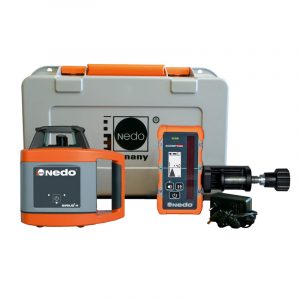
Nedo SIRIUS 1 H rotating laser with ACCEPTOR MAXX LK 3
Art.No.: 471934

Sirius 1 H is the new fully automatic horizontal self-levelling rotating laser for surface, garden and landscape construction or building construction and civil engineering

Original price was: 1.088,99 €.Current price is: 729,99 €.
-31%
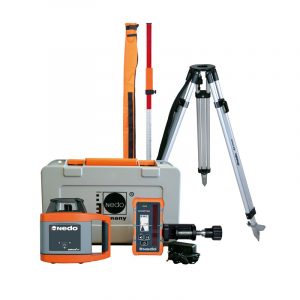
Nedo SIRIUS 1 H rotating laser with ACCEPTOR MAXX, tripod 200225, flexi slats LK 3
Art.No.: 471935

The Nedo Sirius 1 H is a fully automatic horizontal and vertical self-leveling rotating laser

Original price was: 1.207,99 €.Current price is: 829,99 €.

E-PROFISHOP WITH ADVICE

  • A wide range of modern measurement technology
  • Non-binding telephone and e-mail advice
  • Brand devices only. Quality is the top priority
  • Fast delivery to the desired address
  • Measurement technology. Precise. Intelligent
  • Convincing. Professional. Innovative
  • More quality. More security
  • Simple. Fast. Cost-saving
4K5
CONDTROL
geo-FENNEL
HIROTEK
Laserliner
Leica
Nedo
NESTLE
proNIVO
STABILA

The ideal laser devices for all interior and exterior marking works without exception. Bright laser lines make this device indispensable for laying tiles, installing profiles, installing windows and much more. The laser beam receiver, which is included with many models, allows you to capture the laser beam in any lighting. Green lasers provide a high level of comfort in work.

We will traditionally start choosing the best laser level by finding out the main design features. First of all, according to the operating principle, levels are usually divided into line builders and plane builders. The first (point levels) are able to give us two or more points on a plane in succession when marking, allowing us to build a straight line, the classic application for them is the output of horizontals and verticals. A plane builder is able to give either several lines on different walls of the room, or completely expand the cutting plane – this is convenient, for example, when installing suspended or multi-level ceilings. In such levels, the scan is created either statically, by a prismatic system (accordingly, they are also called prismatic), or by a rotating head (rotary levels). The prismatic system is simple and reliable, but it is only capable of projecting a set of rays, and the accuracy of processing and adjustment of the prisms seriously affects the result. A rotating head, of course, will make the level more sensitive to external influences, but it will make it possible to build a full-fledged cross plane. The most complex prismatic models are able to build a plane in the same way as rotary ones – but in such levels, the “intricacy” of the optics is offset by the lack of a rotating head, excuse the involuntary pun.

Let’s summarize: if you just need to have points to manually build a “horizontal-vertical” cross with a ruler or draw a straight line, a regular point level will be enough. More complex work with the orientation of planes will require the use of a rotary or prismatic level. Combined models either provide a cross of lines with additional points for construction, or combine a rotary head with prisms for constructing additional lines: here you choose according to your needs. For example, when tiling walls, having a horizontal in a circle and several verticals is very convenient.

But in order to accurately construct either a line or a plane, you need to know the direction of the true vertical. That is, the level itself must be verified before starting the marking. The simplest option is a bubble level: cheap, cheerful, but inconvenient, especially if the level has to be moved often. Self-leveling mechanisms, at least based on a pendulum (their emitter is set primitively, thanks to gravity) are already more convenient, but have a limited angle of inclination of the body, in which the installation itself is possible (the amplitude of the pendulum oscillation is limited by the design), due to friction in the mechanism they can give an additional error, and when deliberately installed at an angle, they require locking the pendulum. More complex levels use a system of inclinometer sensors and servo drives, they are more accurate and have a wider range of installation angles, but, of course, they are also more expensive.

Мesstechnik Derr Reviews with ekomi.de